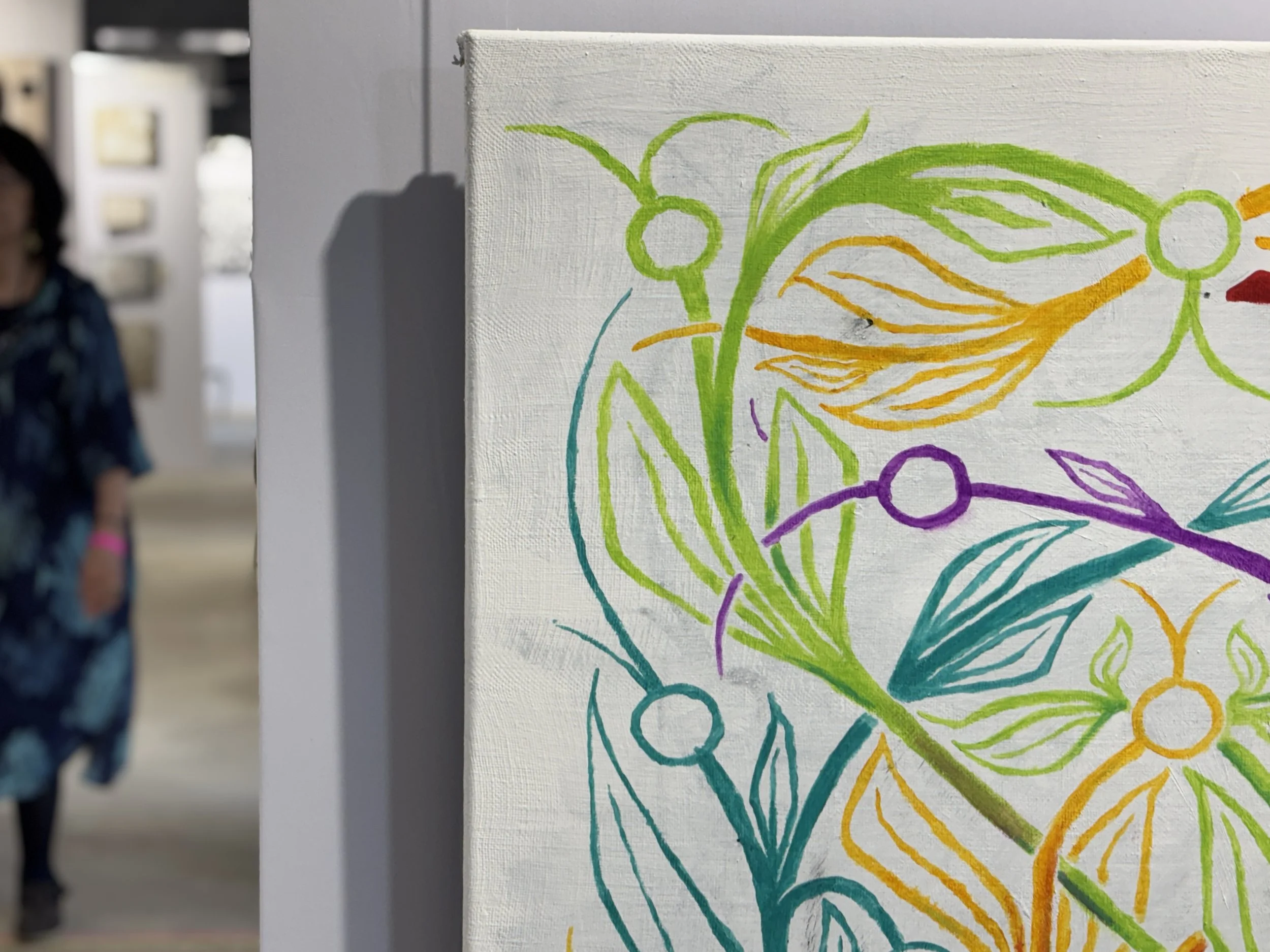
How I build a painting?
Four stages, weeks of work. One painting. Here's what happens between the first idea and the finished canvas.
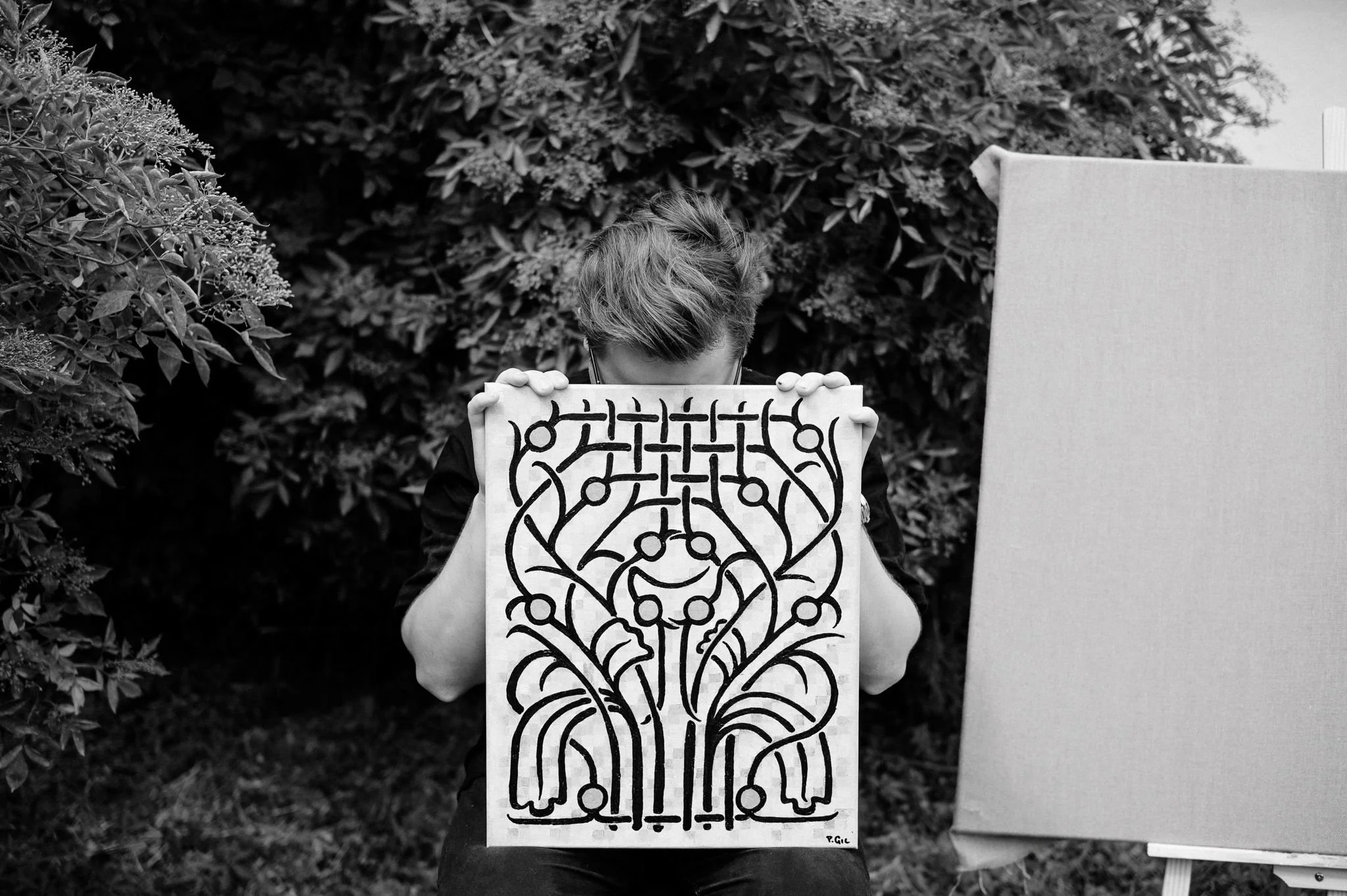
Before I even pick up the paintbrush.
Every painting in the studio goes through a very similar, almost unified set of stages. It’s not because of any pre-established rigid system of mine. The reason is that each of those stages solves a different problem.
I start with the conceptual work to figure out what the painting is about. The sketches are to help me figure out how it is supposed to move. The digital studies figure out whether the composition holds at scale. And the painting itself figures out everything that couldn't be solved on paper or screen.
The process takes usually up to a year, but I manage to get a few smaller works done in between. There are no shortcuts, and there are no assistants. Every mark in every finished work was made by my hands.
What follows below is a walk through each stage. What it looks like, what it's for, and why the whole thing matters.
Stage One:
Conceptual work
Where the painting begins, before any mark is made.
My creative process starts in the archives.
Not really formal ones, but personal collections of Kociewian embroidery patterns, family textiles, botanical references, and regional ethnographic material. I've been gathering these since I started painting.
Kociewian embroidery was passed down through families as guide plates (drawn grids showing which threads to cross, which colours to use, which motifs belonged to which occasion). These plates weren't art objects, but rather simple instructions. The visual logic inside them was based on the harmony and the symmetry. The stepping of organic forms into grid constraints. Almost as if a flower could become an algorithm. This concept is the foundation of everything I paint.
At this stage I'm not drawing.
I'm reading. Looking. Remembering. Sometimes it's a specific pattern from a piece of family linen. Sometimes it's a memory, like picking herbs with my mother-in-law, watching how the dried stems arranged themselves on the tablecloth. Sometimes it's a formal problem: what happens when a symmetrical composition is disrupted by some off-axis elements?
The conceptual stage ends when I can describe the painting in one sentence. Not what it would look like specifically, but what it would beabout.
Stage Two:
Pencil, ink, and charcoal.
Finding the gesture.
Once the concept takes its shape,
I move to paper.
Pencils first! Fast, disposable, searching. The pencil sketches are messy, a little ugly. That is how they're supposed to be. They help me with looking for the gesture of the composition: where the main forms sit, how the eye travels, where the tension is. Other than soft pencils, Ink is unforgiving. That is why it usually comes in the following stage. You can't erase or blend it out, it forces commitment. A line drawn in ink is either right or it isn't, which makes it absolutely horrible for the sketching stage of my creative process.
What’s necessary here is a bridge material.
For me, the perfect sketching medium has the speed, softness and smudging of pencil, but with the weight of deep ink. WIth a miraculous way of quick and easy erasure, of course!
I believe a kind of a middle point can be achieved by using sharpened soft charcoal sticks You can push it across paper with your fingers, drag one form into another, create areas where a line dissolves into tone. This is how I test the softness inside a composition. It is all about establishing the places where the created motif should breathe, and where I’m still missing a few tangled lines.
Most paintings go through a lot of sketches. At this stage I allow myself to run fairly undecided, going through sometimes tens of pages. Of those, two or three carry forward. The rest I usually discard, because as they’ve solved the problem they needed to solve. In other words, when the sketches work is done, I move on to the detail
Stage Three:
A digital study.
Defining and testing the composition before committing to canvas.
A brief explanation what I mean by that.
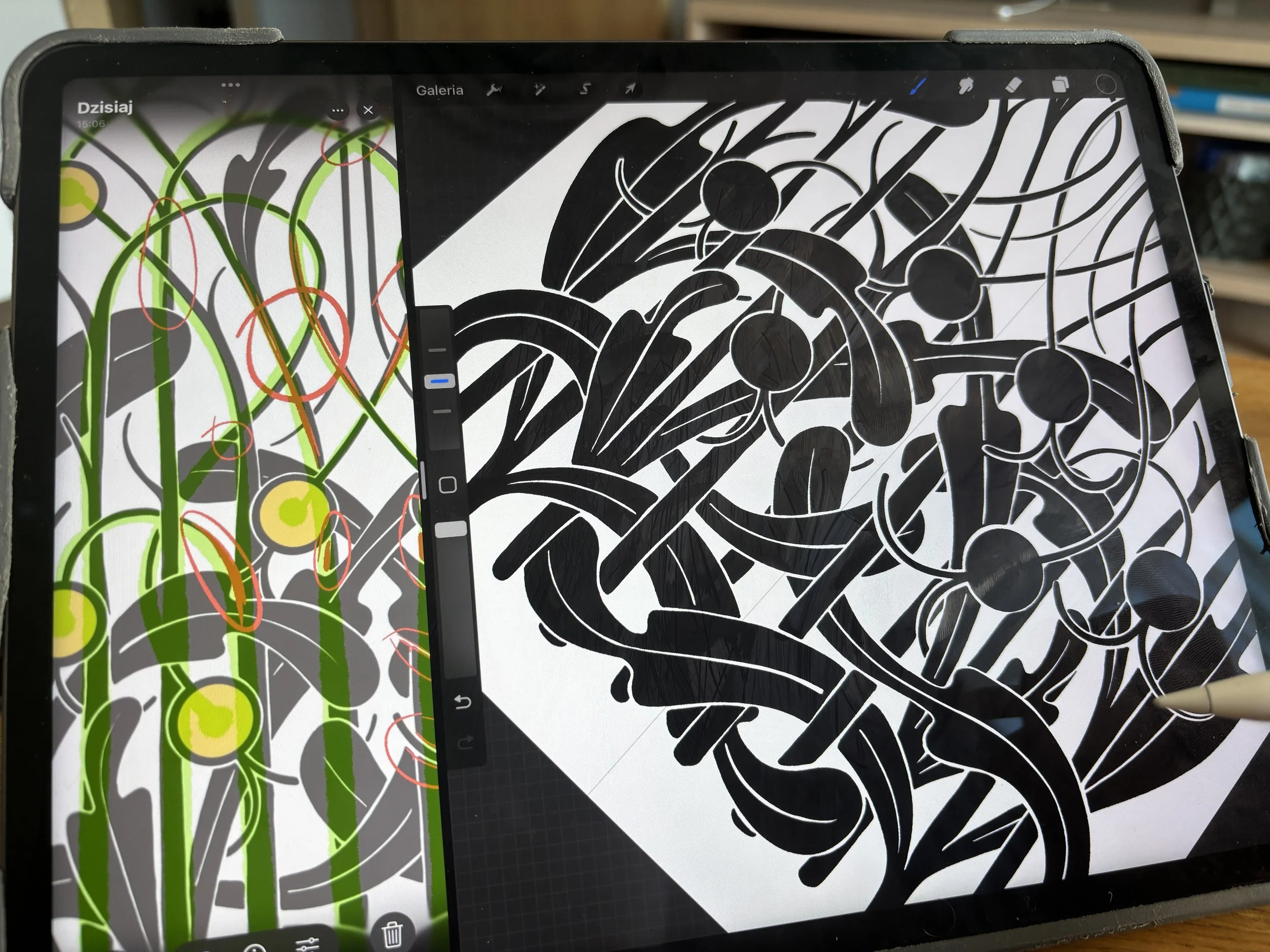
The Digital Studies are an open series of abstract artworks that explore Kociewian ethnographic motifs and heritage symbolism in a digital medium. They are a subtle nod to the original embroidery guide plates. The simplified instruction sheets that were passed between friends and families across generations.
Where the sketches on paper test gesture and structure, the digital studies test contrast relationships and compositional balance at scale, enabling the most detailed work that comes later. A sketches composition that works at 20-something centimetres on paper, doesn't necessarily do well at 100 centimetres on thick canvas. The digital environment lets me freely scale, mirror, rotate, and overlay without consuming physical materials. Without the emotional commitment that comes with putting paint on prepared linen, I’m able to almost endlessly define the most minute composition details. That is why this stage takes usually from 15-20 to sometimes hundreds of work hours. The scariest part is, I love it!
This stage is where many, if not most compositions die.
A motif that felt alive in charcoal can flatten out when rendered digitally. That's valuable information. Better to discover it here than three days into a painting. More often than not, even really detailed sketches get turned around almost unrecognisably at this stage.
That’s why the digital works also function as standalone pieces, several of which have been released as Studio Editions or prints. But their primary role in my art practice is diagnostic; they exist to thoroughly stress-test my ideas. Before any concept earns the right to become a painting, it needs to make sense for me.

Stage Four:
Oil, acrylics, linen.
Where everything that can't be planned gets resolved.
The substrate matters.
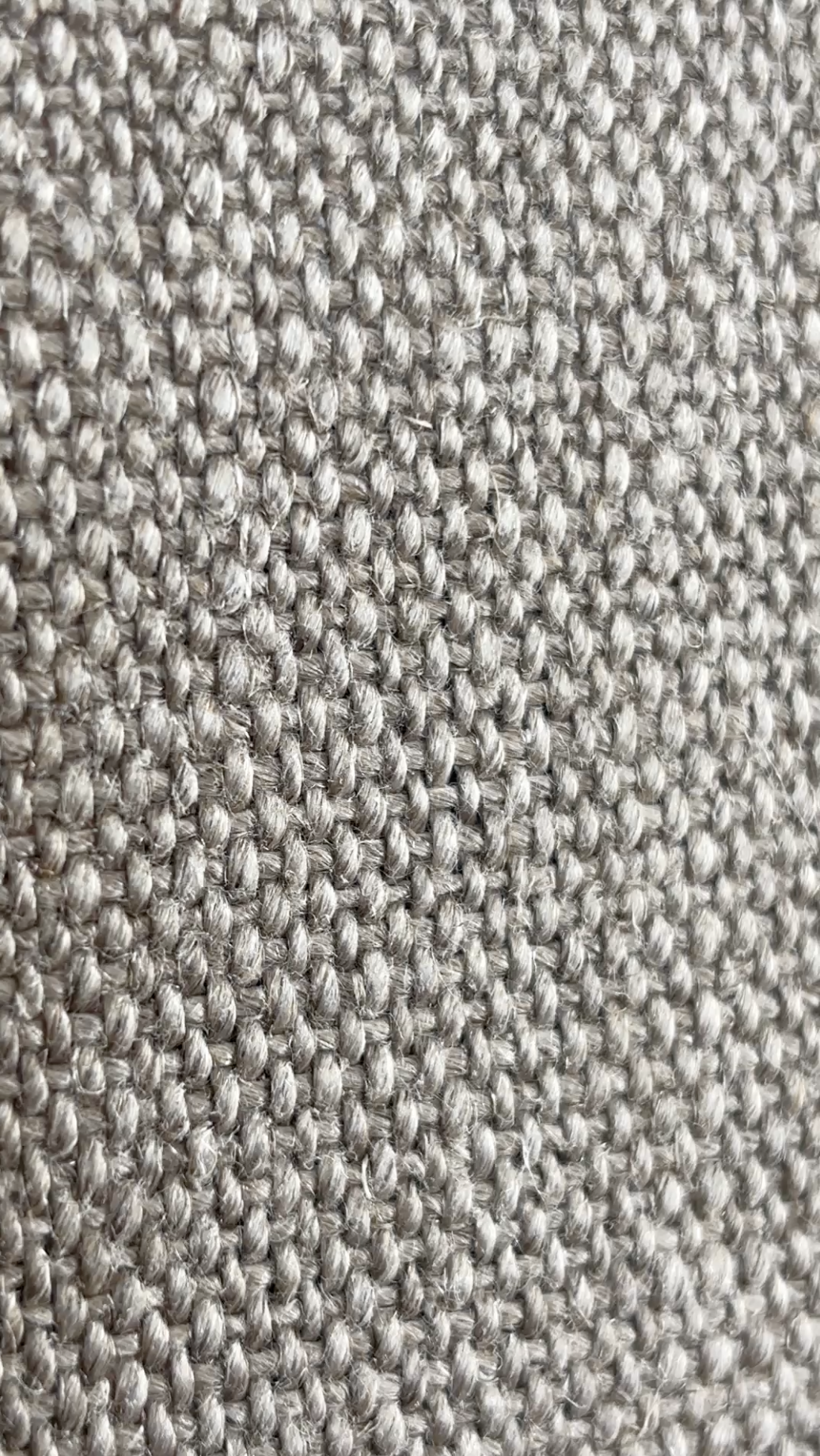
I work on heavy Belgian, French or Polish linen and hemp canvases. Heavy, tightly woven fabric that absorbs oil paint far differently from thin cotton or synthetic backings. Natural, unbleached fibres have wonderfully varied textures that push back against the brush. They introduce physical resistance into the mark-making that is partly controllable and partly not. This choice is entirely deliberate. The connection between the traditionally ground, heavy linen and the vernacular Kociewian source code is material as well as conceptual: thread on linen, paint on linen.
Preparing the Canvas
While not really a part of the creative process per se, building and preparing the canvas is one of the crucial elements of my own satisfaction derived from the specific, finished artwork. The canvas sets a certain vibe and approach framework for the painting that is to follow.
Heavy linen looks out of place on thin, flimsy stretchers. It requires a sturdier and rigid frame.
This combination makes stretching process quite demanding, but worth the effort, as there’s few worse things for a painter than working on a badly-stretched canvas. To streamline the whole process I utilise a few tools, all which are described in this journal entry.
Secondly, setting this particular type of fabric on stretchers with small pins wouldn’t hold one bit. To make sure the canvas remains where I want it, I use heavy steel tacks. Evenly spaced, they secure the linen or hemp in place with almost drum-like tension.
Heavy fabric requires additional preparation.
Then, the natural, weaved texture is more open and much looser than basic, thin cotton canvas, so grounding it requires some extra steps. Before I can start applying my favourite white French gesso (usually the base of my paintings), the canvas needs some real elbow grease.
Stretched canvas needs to be thoroughly dusted and shaved before applying a thick coat of undercoating. True to the region’s tradition, the adhesive I use is a solution of oil, bone glue and water. Prepared well, it creates a thick and sticky paste that dries into a soft, tan shell after soaking into canvas fibres. Last, but not least, the Gesso work!
Everything before this stage is preparation.
The painting itself is where the preparation meets toughest resistance.
Where the work becomes something that I couldn't have fully predicted.
The first layer is structural.
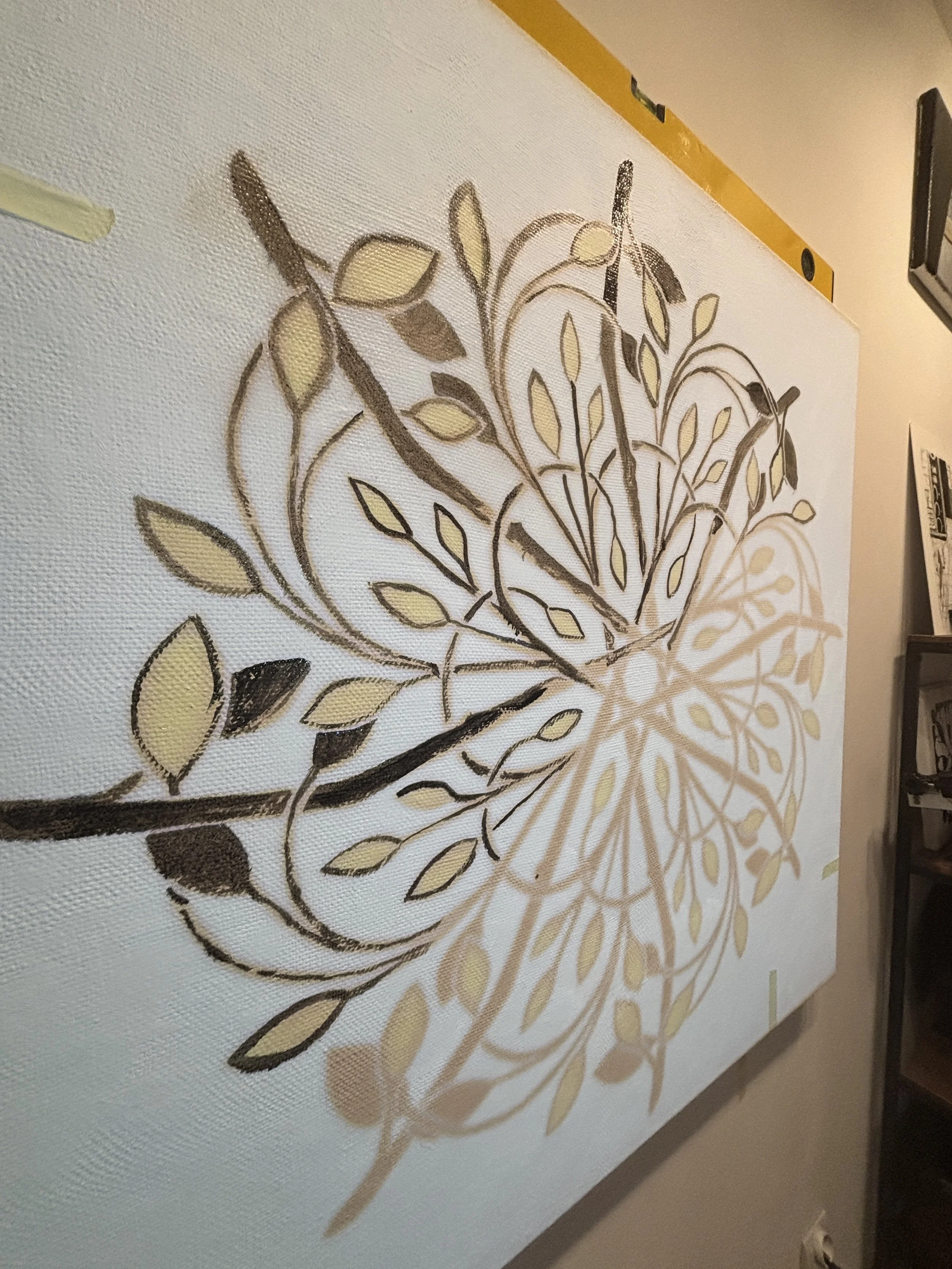
With a delicate grid and the digital study projection at scale, I lay down the main compositional forms. Using oil paint heavily diluted with saffron oil lets me mark the basic forms ot the artwork. Establishing where the symmetries sit, where the weight of the composition falls, and where the negative space will do its work. At this stage, the painting looks nothing like it will when finished.
The middle layers are where
the additive and subtractive processes begin.
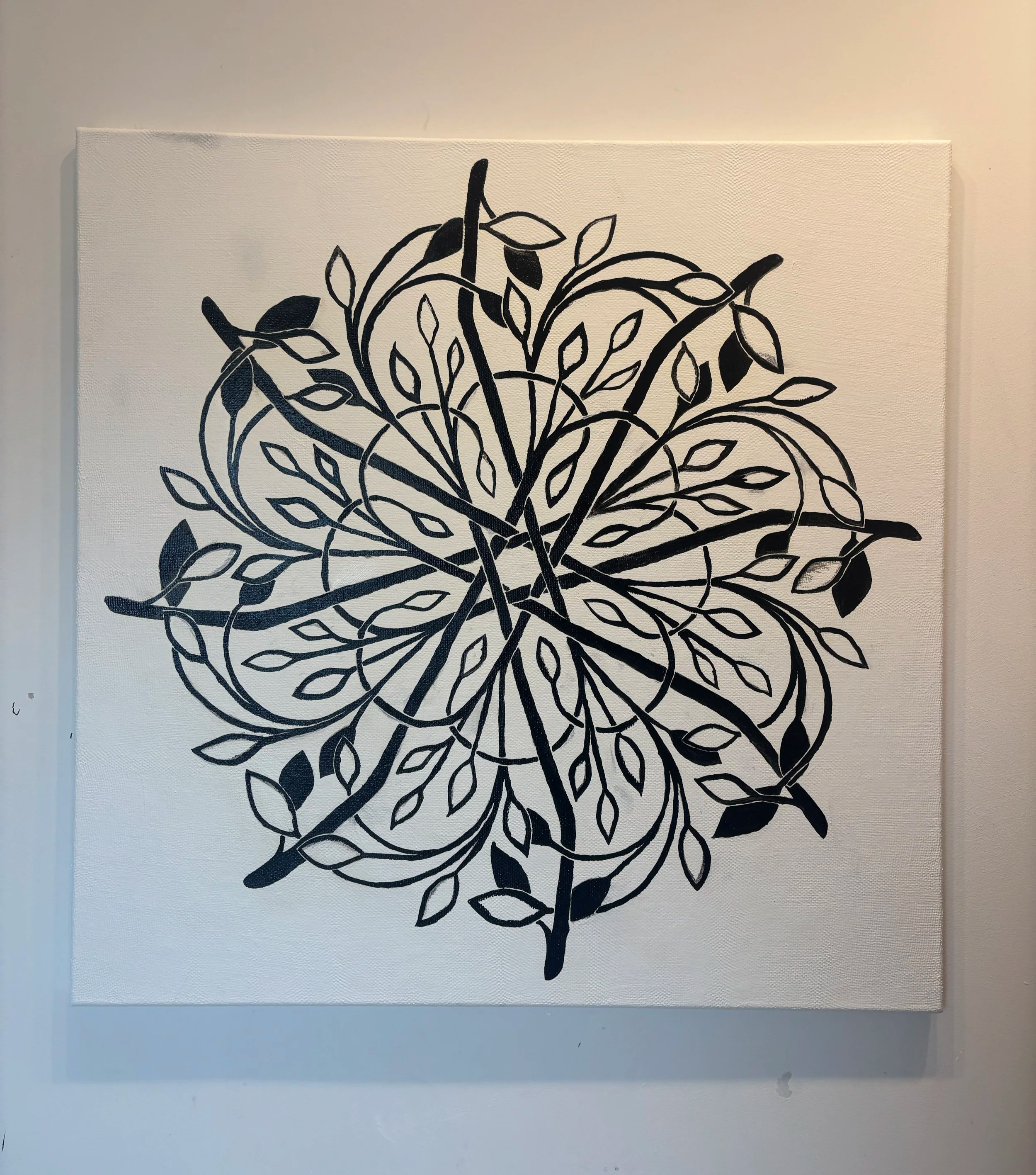
Some areas are built up with impasto — thick, textured paint that catches raking light and creates a physical surface you can read with your fingers. Other areas are scraped back, revealing the underlayers and the linen weave beneath. This push and pull — adding, then removing, then adding again — is how the painting develops its depth. The final surface is archaeological: layers of decision visible through each other.
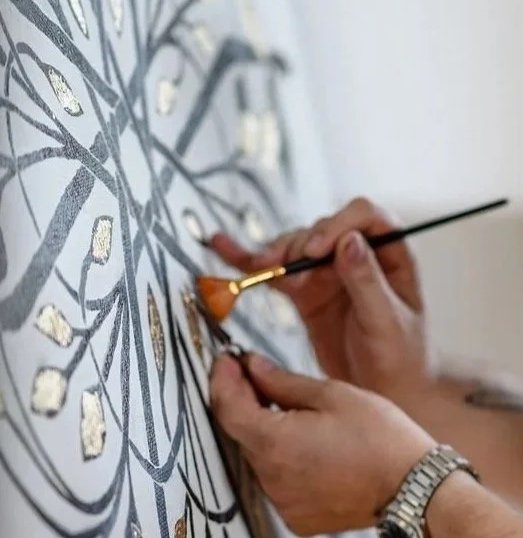
Mixed media elements enter during
the middle and late stages.
Gold leaf connects the work to both religious iconographic traditions and to the material language of value itself. Traditional pigments sourced from the Kociewie region are sometimes mixed into the palette. Spray paint is used selectively for flat, graphic passages that contrast with the hand-worked oil surfaces.

The final passages are the most delicate.
This is where colour relationships are calibrated — a crimson deepened, an ochre warmed, a transition softened. Translucent glazes of oil paint are laid over opaque passages to create depth and luminosity. The linen ground remains visible in certain areas, acting as an active element in the composition rather than a backdrop.
A painting at scale of typically 40 × 60 cm can take me from around two weeks to over a month of active studio work. Working with oils, that time needs to include drying between layers. The total production from concept to finished work is typically six to twelve weeks.
What are my works made of?
Linen & Hemp
Primary substrate. Heavy weave. Absorbs and holds oil paint differently from cotton, introducing controlled resistance into the marks.
Gold leaf
Applied selectively. Connects to religious iconographic traditions and to material questions of value.
Water-based Inks
Used in preparatory sketches and occasionally directly in mixed media works.
Oils
Primary medium. Used in translucent glazes and thick impasto. Multiple layers built over weeks.
Local pigments
Traditional regional pigments mixed into the palette for specific works. Links the material itself back to place.
Charcoal
Primary sketching medium. Speed and smudge quality used to test compositional softness.
Acrylics
Used in smaller works, underpainting and selected passages where faster drying supports the compositional sequence.
Spray paint
Used for flat, graphic passages that contrast with hand-worked oil surfaces.
Belgian linen
Primary substrate. Heavy weave. Absorbs and holds oil paint differently from cotton, introducing controlled resistance into the marks.
Why process matters
when you're collecting?
When you acquire an original from the studio, you're not buying only the final, varnished surface. You're buying every stage that led to it. The research, discarded sketches, compositional tests, material decisions, weeks of layered paint on linen.
This is what separates an original painting from a print or a digital reproduction.
The physical object carries the record of its own making. The impasto catches your room’s evening light at a different angle than it catches the glimpse of morning sun. The scraped-back passages reveal colours that only exist because they were buried and then partially uncovered. The gold leaf changes temperature across the day.
None of this can be photographed adequately, and has to be experienced in person.
That's why studio visits exist, and why the most confident collectors tend to be the ones who've seen the work in the room where it was made.
Full documentation of process, from conceptual research through preparatory works to finished paintings, is available for exhibition and publication purposes. The studio maintains an archive of sketches, digital studies, and in-progress photography for each major work.
Means, rather than ends
For exhibitions interested in presenting my practice as process-based rather than purely
object-based, the preparatory materials can be shown alongside finished paintings.
The relationship between embroidery guide plates, digital studies, and painted works opens a specific curatorial angle: the translation of instruction into gesture across three different media.
For galleries
and institutions